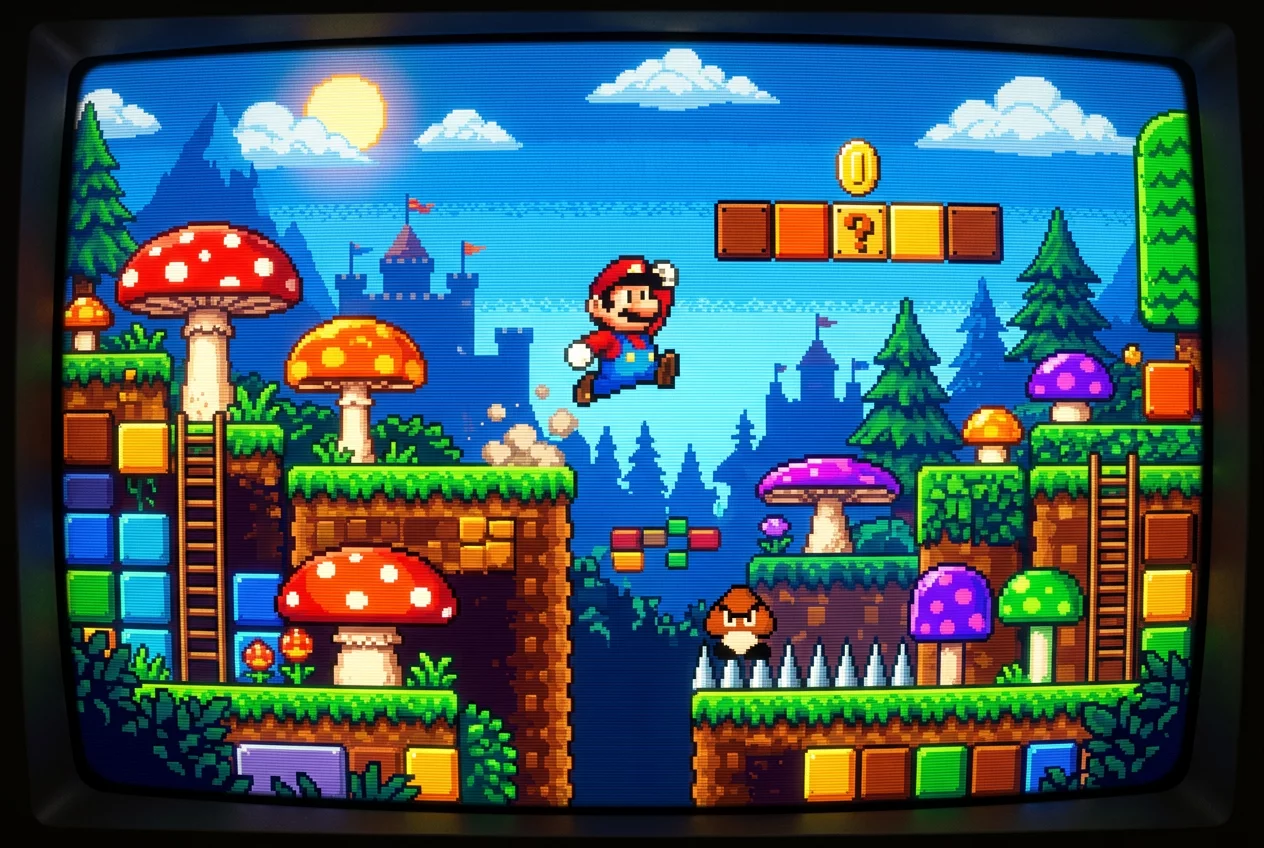
The Uncontested Crown of Retro Platforming
Super Mario Classic is not just a game; it is a cultural phenomenon that solidified the popularity of the 8-bit era. This title represents the absolute crown of technical achievement for the Dendy platform, featuring vibrant color palettes and precise control mechanics that many modern titles still struggle to emulate. In it, various levels challenge the player to master timing and momentum, creating a loop of gameplay that remains incredibly satisfying decades later.
Whether you are navigating the sun-soaked grasslands or diving into the claustrophobic depths of the underground pipes, the visual design stays consistent and charming. The music provides a rhythmic backdrop to every jump, and the sound effects for collecting coins or powering up are etched into the memory of every child of the 90s. Thousands of fans continue to hunt for this cartridge today, proving its status as a timeless piece of art.
The level design in Super Mario Classic is often studied in game design courses around the world. Each stage introduces a new mechanic or obstacle in a safe environment before escalating the challenge. World 1-1 remains a textbook example of invisible tutorial design, teaching players to jump, run, and explore without a single text prompt. This philosophy of organic learning influenced countless developers and established a benchmark for intuitive game design.
Gameplay Mechanics and Online Legacy
The transition to modern hardware has allowed new audiences to experience this gem. Today, playing Super Mario online has become a common way for speedrunners and casual fans alike to share their experiences without needing the original hardware. The controls remain sharp, allowing for the pixel-perfect jumps required to reach the highest flagpole at the end of each stage. Every secret block and hidden star adds layers of depth that keep the adventure fresh.
Inside the game, power-ups serve as the primary motivation for exploration. Taking a mushroom doubles your scale and provides a critical safety net against enemies, while the fire flower transforms the heroic plumber into a projectile-slinging force. These mechanics established the template for every side-scroller that followed, making it mandatory study for anyone interested in game design history.
Beyond the standard campaign, the game hides a wealth of secrets that reward curiosity. Warp zones allow savvy players to skip entire worlds, while invisible coin blocks and hidden vines lead to bonus areas filled with extra lives. The underwater stages introduce a completely different physics model, requiring players to adapt their movement style on the fly. Castle levels at the end of each world culminate in tense boss battles against the fire-breathing Bowser, testing everything the player has learned.
Speedrunning and Competitive Play
In recent years, the speedrunning community has breathed new life into this classic. World record attempts involve frame-perfect jumps, deliberate glitch exploitation, and route optimization that shaves milliseconds off previous bests. The competitive scene has transformed what was once a leisurely childhood experience into a high-stakes athletic performance, complete with live audiences and international tournaments.
The enduring popularity of Super Mario Classic is a testament to the power of elegant design. It does not rely on cinematic cutscenes or complex narratives; instead, it offers pure, unadulterated gameplay that anyone can pick up but few can truly master. From its iconic theme music to its carefully tuned difficulty curve, every element works in harmony to create an experience that transcends generations.
Collectors today seek out original cartridges in pristine condition, often paying premium prices for sealed copies with intact labels. The game has been ported to virtually every Nintendo console since its debut, yet the original 8-bit version retains a special place in the hearts of purists. Its legacy is woven into the very fabric of video game history, serving as both a nostalgic touchstone and an enduring example of design excellence.
The fan community surrounding Super Mario Classic remains incredibly active. Annual tournaments, fan art exhibitions, and collaborative hack projects demonstrate that the game is far more than a historical artifact. It is a living, breathing piece of culture that continues to inspire creativity across multiple generations of players and developers alike. From speedrunning marathons to academic studies on its level design, the influence of this 8-bit masterpiece shows no signs of fading.
Player Reviews
PixelFan99
2026-05-10Absolute classic! Still plays better than most new games.
RetroGamerX
2026-05-11Spent my childhood on this. The castle music still gives me chills!
Leave a Review